
Hamstring exercises with a stability ball: curls, bridge and plan
Hamstring exercises with a stability ball are useful when you want to train your hamstrings at home or in the gym without a machine. The main move is the stability-ball hamstring curl: lie on your back, place your heels on the ball, lift your hips and roll the ball toward you in control. Start with the bridge version, then move to full curls. Keep your pelvis steady, control the return and choose clean reps over high numbers.

In short
A stability ball makes hamstring training less stable than a floor bridge. That is the benefit, but also the reason to build it gradually. If your hips drop, your lower back takes over or the ball keeps rolling away, the version is too hard. Start with a stability-ball hamstring bridge, then short curls, and only later single-leg work.
For the wider exercise overview, start with hamstring exercises. For a complete home routine, use hamstring exercises at home. This article stays narrower: which hamstring exercises with a ball make sense, how do you perform them, and when should you progress?
Why hamstring exercises with a ball help
Hamstring exercises with a ball combine knee flexion, hip extension and trunk control. In a basic bridge, the knee angle barely changes. In a hamstring curl with a ball, your heels pull the ball toward you while your hips stay lifted. That trains strength and positional control at the same time.
Exercise choice matters. EMG research shows that different hamstring exercises create different activation patterns, so a curl, hinge and Nordic do not train the same thing (McAllister et al., 2014). Use the ball for a specific goal: controlled braking, stable hips and a clear left-right comparison.
Stability-ball hamstring curl step by step
Use a ball that feels firm and does not collapse. Lie on your back with your heels on top of the ball. Lift your hips, lightly brace your trunk, then pull the ball toward you by bending your knees. Roll it back in two to three seconds and lower your hips only after the rep is finished.
Start with 2 sets of 6 to 8 reps. If that is clean, move to 3 sets of 8 to 10. If you mainly get cramp, shorten the range or use bridge holds first.
Use the same checkpoints every session. Your ribs stay down, your pelvis stays level and the ball moves because your heels pull it, not because you swing your hips. A good repetition should feel slower on the way out than on the way in. If you cannot pause for one second with the knees bent, keep the range shorter until the position is stable.

Swiss ball hamstring curl: technique and mistakes
The swiss ball hamstring curl is the same exercise under its common English training name. The key is not speed. Keep your hips high, avoid turning the feet outward to clamp the ball, and stop the range before the final part gets messy.
Heavier Nordic variations can create high hamstring activation, but they are a different step than light curls and bridges (van den Tillaar et al., 2017). A good ball curl should feel calm and repeatable, not like a fight for balance.
Hamstring bridge with a stability ball
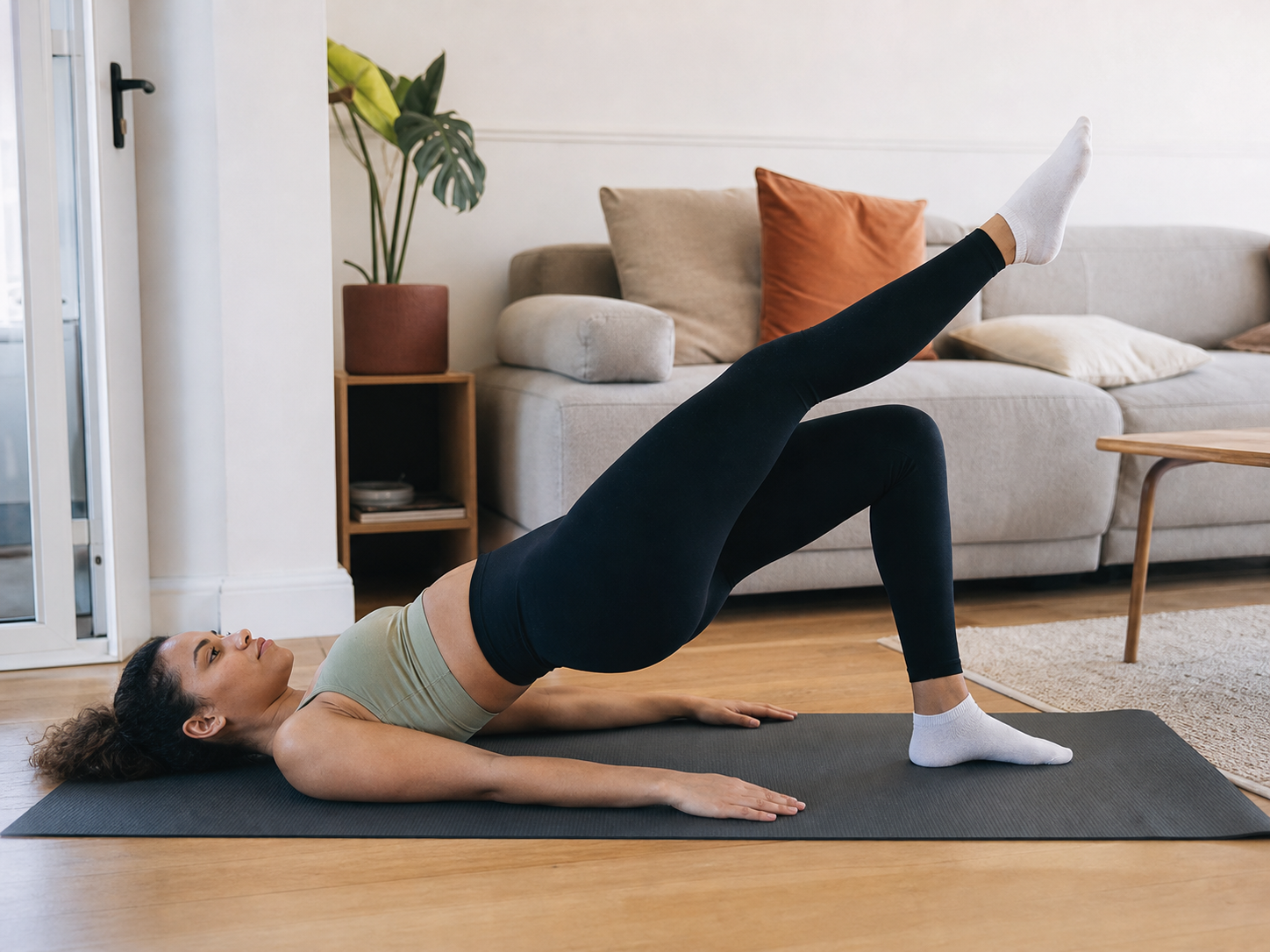
The hamstring bridge with a stability ball is the best starting point. Place both heels on the ball, lift your hips and hold for 10 to 20 seconds. If you feel your lower back more than your hamstrings, tuck your pelvis slightly and shorten the hold.
Build in four steps: bridge hold, short curl, full two-leg curl, then a single-leg bridge hold or short single-leg curl. For similar bodyweight progressions, continue with hamstring slider exercises.
From ball curls to sliders or Nordic curls
A hamstring curl with a ball is not the end point. Choose the next step from your goal: more reps for control, a slower return for braking strength, slider curls for a heavier bodyweight curl, or assisted Nordics once your curls and bridges are solid.
Eccentric loading is important, but the load must fit your current level. Nordic hamstring programs are linked with lower hamstring injury rates in sport populations, yet that does not mean every home user should start with full Nordic reps (Petersen et al., 2011; Al Attar et al., 2017). The usual order is bridge, ball curl, slider curl, assisted Nordic, and later heavier Nordic work.
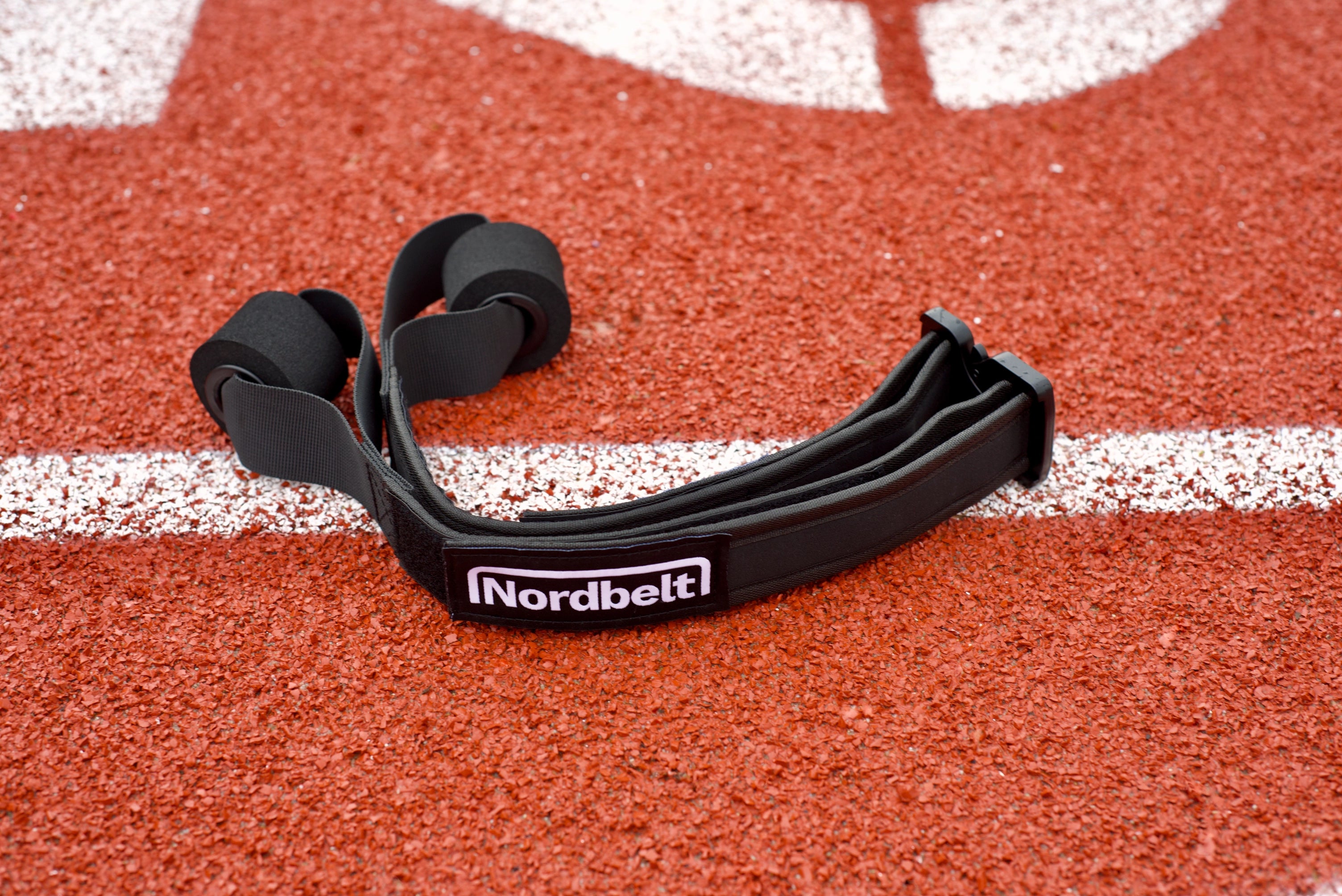
Read eccentric hamstring exercises for the braking phase and Nordic hamstring curl for the next strength step. For setup, use the How-to guide. Nordbelt becomes relevant when you want a repeatable low ankle fixation for sliders, assisted Nordics and further progression.
FAQ
Is a stability-ball hamstring curl effective?
Yes, if you control it. It trains knee flexion with extra hip and trunk stability, and it works well between bridges and heavier slider or Nordic variations.
Is a fitness-ball curl the same as a swiss ball hamstring curl?
Yes. The names differ, but the exercise is the same: heels on the ball, hips up, roll the ball toward you and return slowly.
Can I do hamstring exercises with a ball at home?
Yes. Use a mat or floor with grip and start with short bridge holds. If the ball rolls away, make the exercise easier before adding reps.
Is a hamstring bridge with a stability ball hard enough?
For beginners it can be hard enough. For stronger users it is a starting step before full curls, slider curls and assisted Nordics.
When should I progress from ball curls?
Progress when you can complete three clean sessions without cramp, hip drop or lower-back dominance. Then add slider curls or walkouts before assisted Nordics.


