
Handball hamstring exercises: sprint, jump and brake stronger
Handball hamstring exercises need to match short sprints, sudden braking, side steps, jumping and controlled landings. A good handball hamstring plan combines hip strength, knee-flexion strength, single-leg control, eccentric braking and calm Nordic progressions that are not placed right before a heavy match.

At a glance
Handball asks a lot from the hamstrings because every attack mixes acceleration, deceleration, jumping, landing and contact in small spaces. That is why handball hamstring exercises work best when they combine strength and control: bridges, walkouts, single-leg hinges, sliders and later assisted Nordics. In young female handball players, Nordic hamstring training supported sprinting, change of direction and repeated-sprint performance when it was planned carefully (Chaabene et al., 2020).
Use this article as the handball-specific layer on top of the broader guide to hamstring exercises. First build clean positions, then strength, then Nordic progression and weekly planning.
Why hamstrings brake hard in handball
Handball rarely gives you long straight running. You accelerate into a gap, brake before a shot fake, push sideways, jump, land and move again. Your hamstrings help slow the lower leg at speed, control the hip and work with the glutes and trunk when you land or absorb contact.
That makes hamstring strength for handball different from a random finisher at the end of training. In handball players, Nordic hamstring exercise has been studied directly. Work with 10- to 11-year-old female handball players found high hamstring activation and favourable mechanical adaptations after longer Nordic training (Vaczi et al., 2022).

Which handball hamstring training comes first?
Choose exercises that make movement cleaner before you chase heavier loading. If a strength block makes sprinting stiff, landing loud or braking slow, the session was probably too heavy or too close to handball practice.
- heel-drive glute bridge;
- hamstring walkout;
- single-leg Romanian deadlift;
- hamstring slider curl;
- slow split squat;
- quiet jump landing;
- assisted Nordic hamstring curl;
- full Nordic hamstring curl.
The 7 best handball hamstring exercises
Use the list as building blocks. Pick two or three exercises that fit your current phase, match schedule and recovery.
1. Heel-drive glute bridge
Drive through the heels, lift the hips and hold the top for two seconds. This teaches the hip and hamstring to work together without heavy soreness.
2. Hamstring walkout
Start from a bridge and slowly walk the feet away. Stop before the lower back takes over.
3. Single-leg Romanian deadlift
Hinge from the hip on one leg, keep the pelvis level and move slowly. This fits handball because many braking and take-off actions happen from one leg.
4. Hamstring slider curl
Slide the heels in and out under control. Start with two legs, then progress to single-leg or eccentric-only work. See the dedicated guide to hamstring slider exercises for progressions.
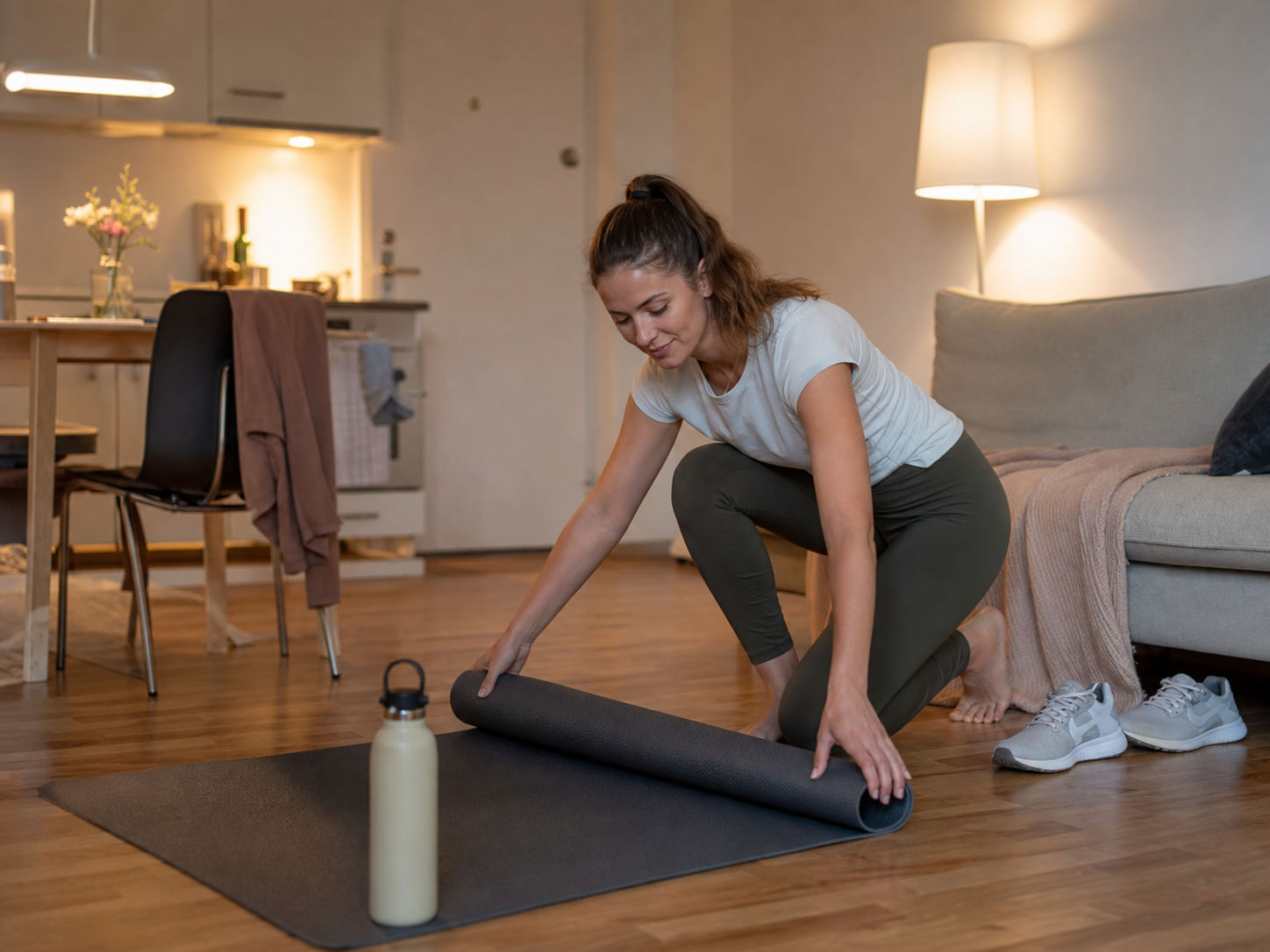
5. Slow split squat
Lower for three seconds, keep the knee quiet over the foot and push back up smoothly. It teaches braking through hip, knee and ankle together.
6. Assisted Nordic hamstring curl
Fix the ankles, lean forward slowly and use hands, a band or a shorter range for help. Start with 2 sets of 3 to 5 calm reps.
7. Sprint-brake drill
Sprint 5 to 10 metres, brake in three short steps and land quietly. Keep volume low and stop before landings get noisy or uneven.
For more exercise choices, pair this article with the guide to eccentric hamstring exercises.
Nordic hamstring for handball
The Nordic hamstring curl can fit handball well, but only with sensible dosage. Across multiple sports, programmes including Nordic hamstring exercises reduce hamstring injury rates when athletes progress and keep doing them (van Dyk et al., 2019). A football trial also reported fewer acute hamstring injuries after progressive Nordic training (Petersen et al., 2011). This is not a guarantee for handball, but it supports the role of eccentric hamstring strength.
Start with 1 to 2 sessions per week, 2 sets of 3 assisted reps. Build towards 2 to 3 sets of 5 only if sprinting, jumping and soreness remain normal.
Read the Nordic hamstring curl guide before making it heavy. With Nordbelt you can fix the ankles low at home, in a gym or in a team room, which makes the setup more consistent.

Handball hamstring training in a match week
- 48 to 72 hours before a match: light technique, bridges, hinges or a few assisted Nordics.
- 24 hours before a match: avoid heavy eccentric hamstring blocks.
- After the match: recovery, mobility and light activation.
- On a lower-stress strength day: sliders, single-leg hinge and Nordic progression.
The Nordic hamstring curl football schedule is not a handball plan, but its timing logic around match days and fatigue is useful.
Reducing hamstring-injury risk in handball without false certainty
No single exercise prevents every injury. Load, fatigue, timing, technique, surface, contact and recovery all matter. A structured warm-up programme helped reduce lower-limb injuries in youth sport (Olsen et al., 2005), but it only works when it becomes routine.
- Can you perform the exercise cleanly?
- Can you sprint, jump and brake normally the next day?
- Does it still fit the week after a heavier-than-expected match?
If pain is sharp, increasing or clearly one-sided, stop progressing. After a recent hamstring injury, radiating pain or repeated symptoms, get physiotherapy guidance.
FAQ
Which handball hamstring exercises matter most?
Start with bridges, walkouts, single-leg hinges and sliders. Add assisted Nordics later when technique and recovery stay solid.
Does the Nordic hamstring curl fit handball?
Yes, if it is dosed carefully. Use assistance, low reps and enough distance from hard practices or matches.
How often should I train hamstrings next to handball?
One or two short sessions per week is enough for most players. Keep match weeks lighter.
Can hamstring injuries in handball be prevented?
You can probably lower risk with gradual loading, warm-up, strength work and recovery, but no exercise removes risk completely.
Where does Nordbelt fit?
Use Nordbelt for controlled Nordic progressions outside the busiest handball moments. Follow the How-to guide and let the handball week lead the dosage.


