
Learn the hip hinge: technique, 3 drills and mistakes
Learning the hip hinge means bending from your hips while keeping your knees softly bent and your trunk steady. Push your hips back, keep pressure across your whole foot and stop when your hamstrings become tense without your lower back changing shape. Start with a wall tap, then use a dowel along your back and only then practise the movement freely. This lets you learn the hinge before adding weight, speed or a deadlift variation.

Quick overview
The hip hinge is not a deep squat. In a clean repetition your hips travel mainly backwards, your knee angle changes only slightly and tension builds along the back of your thighs. Begin without weight. Can you tap the wall, keep three contact points with a dowel and complete six calm repetitions without losing balance? Then the foundation is stable enough to make the movement a little larger or heavier.
This page is about the movement pattern. When you want to load it, continue with the related guide to the Romanian deadlift as a hamstring exercise. That page covers weights, variations and programming; this one stays focused on where the movement comes from.
What is a hip hinge?
A hip hinge is a movement in which your torso leans forwards because your hips flex. Your hips travel back, your feet stay firmly planted and your spine keeps roughly the same shape. You see the pattern in a Romanian deadlift, kettlebell deadlift, single-leg deadlift and many everyday lifting tasks.
That does not make the hinge one specific exercise. It is a skill on which you can build exercises later. Hamstring-activation research shows that different hip- and knee-dominant exercises can emphasise different areas within the same muscle group (Bourne et al., 2017). It therefore makes sense to master the hinge first and then choose the exercise that fits your training goal.
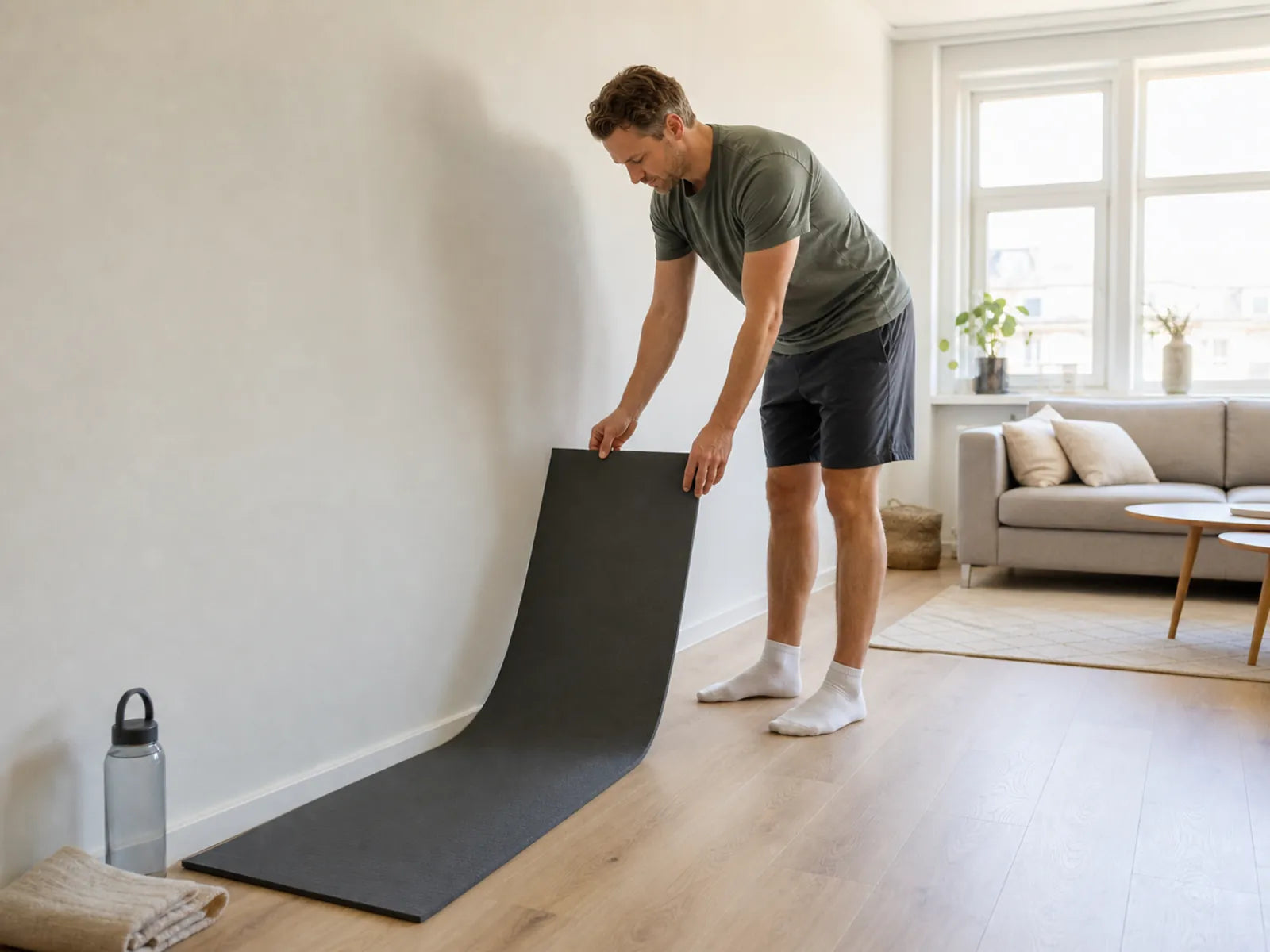
Wall hip-hinge drill
The wall tap is the simplest hip-hinge drill. You only need a clear wall and about an arm’s length of space.
- Stand with your back to the wall, roughly 15 to 20 centimetres away.
- Place your feet about hip-width apart and soften your knees.
- Hold your hands by your ribs or in front of your chest.
- Push your hips back until your glutes gently touch the wall.
- Keep your feet flat and stop your knees from continuing to travel forwards.
- Return by bringing your hips forwards without leaning backwards.
If this is easy, move your feet a few centimetres farther from the wall. Stop when you have to jump backwards, your toes lift or you can reach the wall only by rounding your back. The correct distance is the one at which you can still control the entire movement.
Hip-hinge technique with a dowel
A dowel helps you check whether your hip-hinge technique comes from your hips without your torso changing shape along the way. Use a broom handle, PVC pipe or light training stick.
Hold the dowel vertically along your back. Let it touch three points: the back of your head, upper back and sacrum. Hinge forwards slowly while maintaining all three points of contact. A small natural gap at your neck and lower back is normal; you do not need to press your spine flat against the dowel.
Watch for these signs:
- if the dowel loses contact with your sacrum, you are often rounding through your lower back;
- if it loses contact with the back of your head, you may be lifting your chin or dropping your chest;
- if your knees continue to bend more deeply, the hinge is turning into a squat;
- if your weight shifts towards your toes, your hips are usually not travelling back far enough.
Complete two sets of five slow repetitions. Pause for one second at the bottom and move only as far as you can while keeping all three contact points.
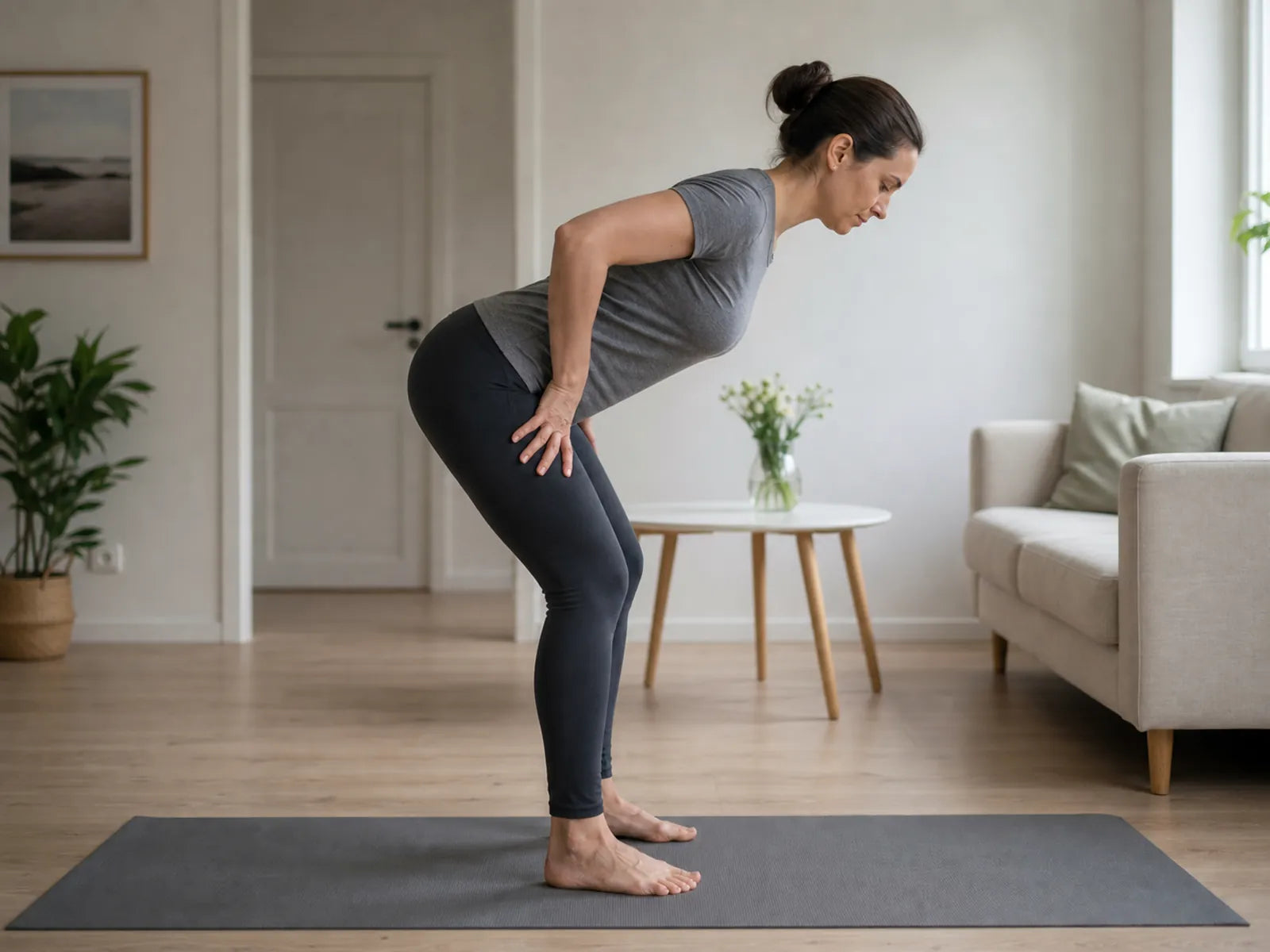
Hip hinge or squat?
In a squat, your knees and hips move together and your pelvis travels mainly downwards. In a hip hinge, your hips travel mainly backwards and knee flexion stays more limited. Both movements can belong in a leg programme, but they do not solve the same technique problem.
Use a simple check. Place a chair behind you. In a squat, lower yourself towards the seat under control. In a hinge, reach the edge with your glutes while your shins remain relatively still. If every hinge feels like a squat, reduce the range of motion and return to the wall drill.
If you want to combine both patterns in one home session, the guide to training legs at home without equipment gives a broader split across squats, lunges, hinges, bridges and hamstring work.
Feeling your hamstrings in the hip hinge
Feeling your hamstrings in the hip hinge usually means a gradual tension along the back of your thighs, not a sharp stretch or pain. The tension increases as your hips travel farther back while your knee angle stays roughly the same. You do not need to lower yourself as far as possible.
Try this third drill:
- Place your fingertips in the crease at the front of your hips.
- Push your hips back as if you wanted to make that crease smaller.
- Keep your knees soft without allowing them to bend more deeply.
- Stop as soon as you clearly feel tension at the back of your thighs.
- Stand up and briefly contract your glutes without arching your lower back.
If you feel only your lower back, make the movement smaller and use the wall or dowel again. If you mainly feel the front of your thighs, you are probably bending your knees too much. Comparisons of lower-body exercises support that hip-dominant and knee-dominant variations do not create the same muscular demands (McAllister et al., 2014; Ebben, 2009).
From hip hinge to deadlift movement
If you want to learn the deadlift movement, add load only after the unloaded hinge is repeatable. Use this progression:
- wall tap: 2 x 6 calm repetitions;
- dowel test: 2 x 5 with a short pause at the bottom;
- free bodyweight hinge: 2 x 8;
- light backpack or kettlebell held close to the body: 2 to 3 x 6;
- only then move to a specific Romanian-deadlift or deadlift variation.
Progress only when your feet stay stable, the movement comes from your hips and each repetition looks much the same. A heavier weight does not correct an unclear pattern. It mainly increases the need to maintain tension and position.
For a full overview of other posterior-chain options, continue with effective hamstring exercises or a practical home hamstring exercise plan.
Keeping a neutral back while bending
Keeping your back neutral while bending does not mean forcing your lower back into a perfectly straight or rigid position. The aim is for your spine to retain a calm, neutral shape while your hips produce most of the movement. Look at the floor roughly one to two metres ahead, keep your ribs above your pelvis and take a calm breath before each repetition.
Avoid both extremes: lifting your chest excessively and arching your lower back, or lowering so far that your pelvis tucks under and your back rounds. The best depth is the largest range you can still control. You can film yourself from the side. Check the hip movement, knee angle and spinal shape rather than how close your hands come to the floor.
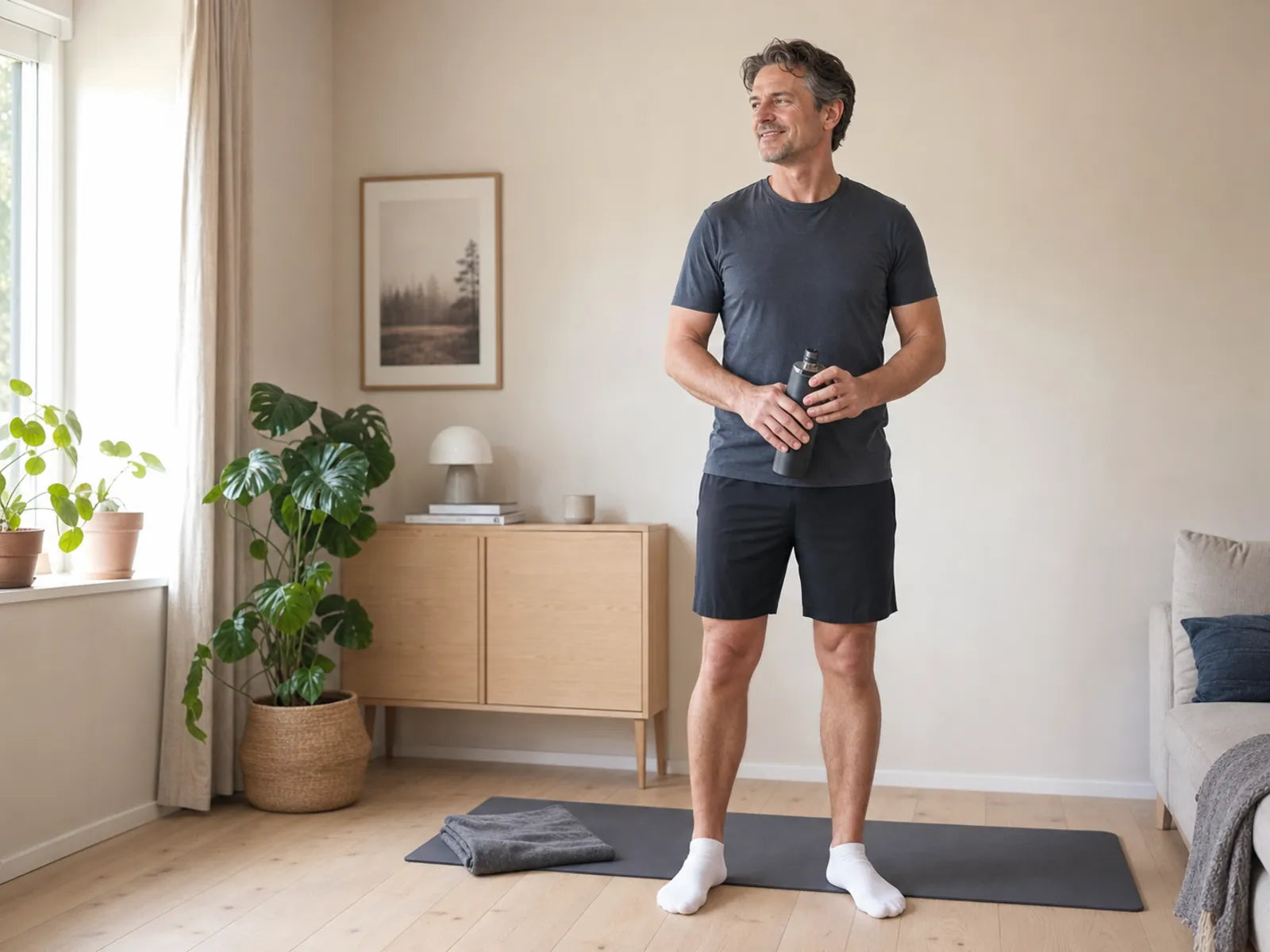
Once the hinge feels solid, combine it with bridges, sliders or, later, a controlled Nordic progression. The Nordbelt How-to guide explains low ankle fixation when you are ready for that later step. Nordbelt provides a stable ankle setup; it does not replace the hip-hinge technique learned here.
Frequently asked questions
What is a good hip-hinge drill for beginners?
The wall tap is the best first hip-hinge drill for many beginners. The wall gives you a clear target: your hips move backwards without you having to guess how far. Start close, keep your feet flat and increase the distance only when you can touch the wall calmly without falling backwards or rounding your back.
How do I know whether my hip-hinge technique is correct?
Your hip-hinge technique is useful when your hips clearly travel backwards, your knees stay softly bent, your feet remain stable and your spine keeps roughly the same shape. You feel gradual tension in your hamstrings and glutes. The dowel test is a practical check: the back of your head, upper back and sacrum remain in contact.
Why can’t I feel my hamstrings during the hip hinge?
You may be bending your knees too much, moving too little from your hips or shifting your weight towards your toes. Return to the wall tap, keep your shins quieter and push your hips farther back. Do not deepen the movement once your spinal position changes. Tension can be clear, but it should not feel sharp or painful.
Can the hip hinge teach me the deadlift movement?
Yes. The hip hinge is the movement foundation for many deadlift variations. Learn the wall tap, dowel test and free bodyweight hinge first, then add a light backpack or kettlebell. Use the separate Romanian-deadlift guide for specific RDL technique, load selection and variations so the movement skill and loaded exercise each retain a clear owner.
How do I keep my back neutral while bending?
Move your hips backwards, keep your ribs calmly above your pelvis and stop before your lower back changes shape. A neutral back is not forced flat; it is a repeatable position without excessive arching or rounding. Use a dowel along your back or film yourself from the side to check the movement.


